Skip to content

Test- Freezing a loaf

A week ago, my oven broke and I was ready to bake a whole wheat  sandwich loaf with my sourdough starter at the time.   So,  I put the dough in the freezer as soon as I shaped it.

7 days, that I kept the dough in the freezer.

The 7th day was when my oven was fixed, I transferred the dough to the refrigerator from the freezer to thaw gradually for 24 hours.
Then, I left the dough at the room temperature at 68F for 6 hours before baking.

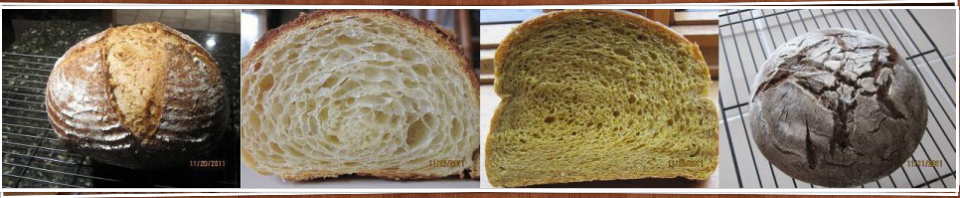
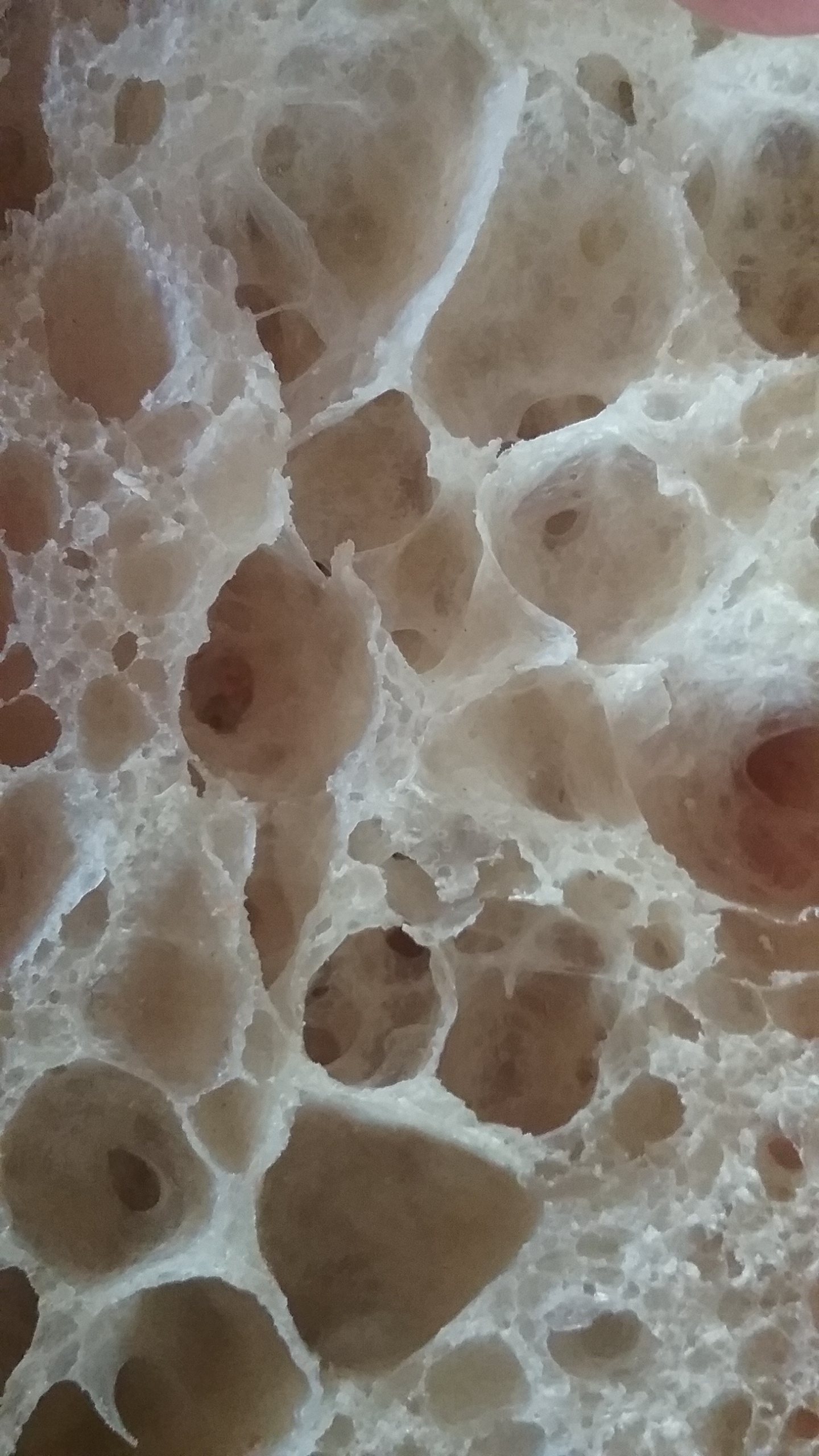
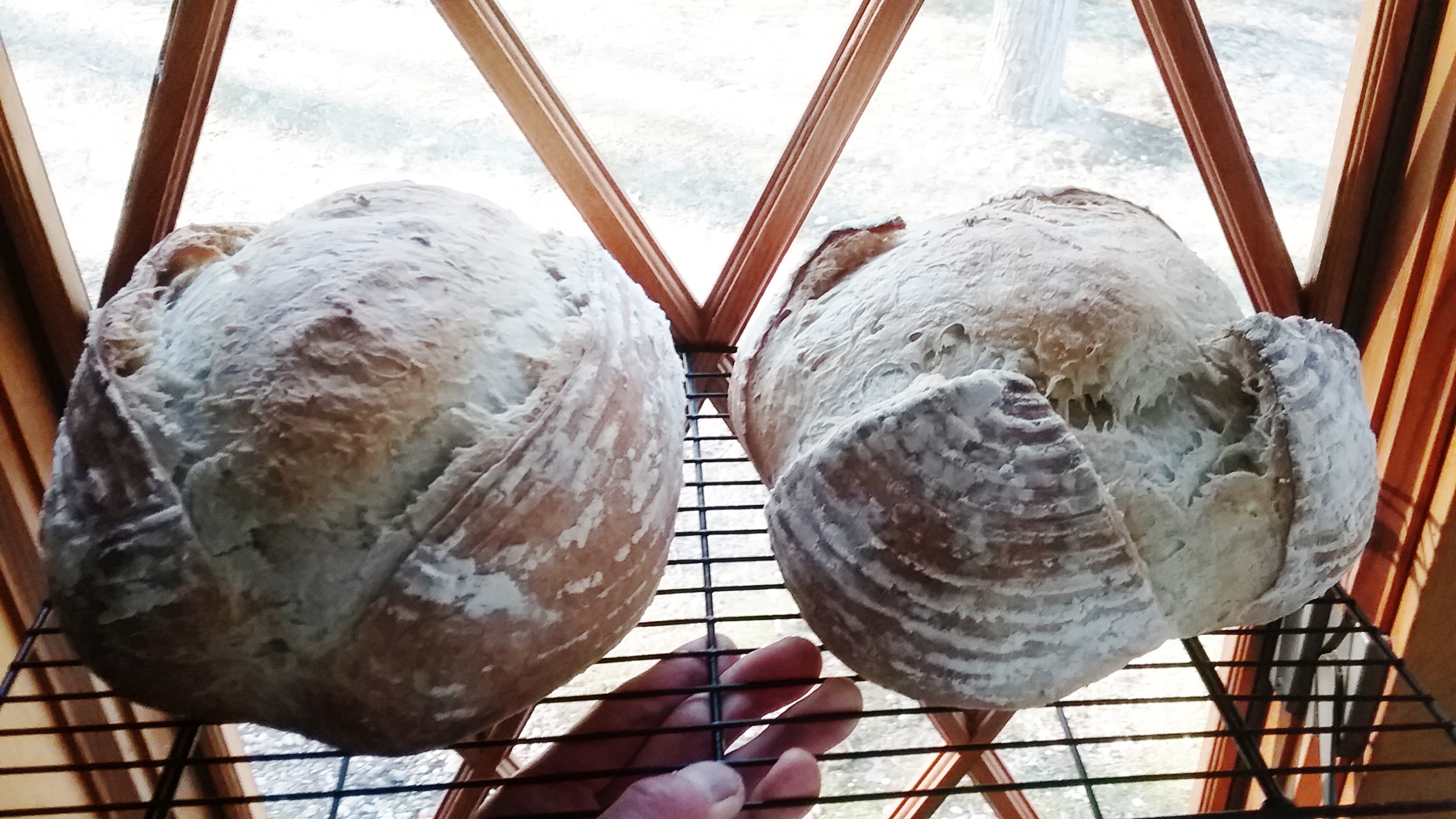
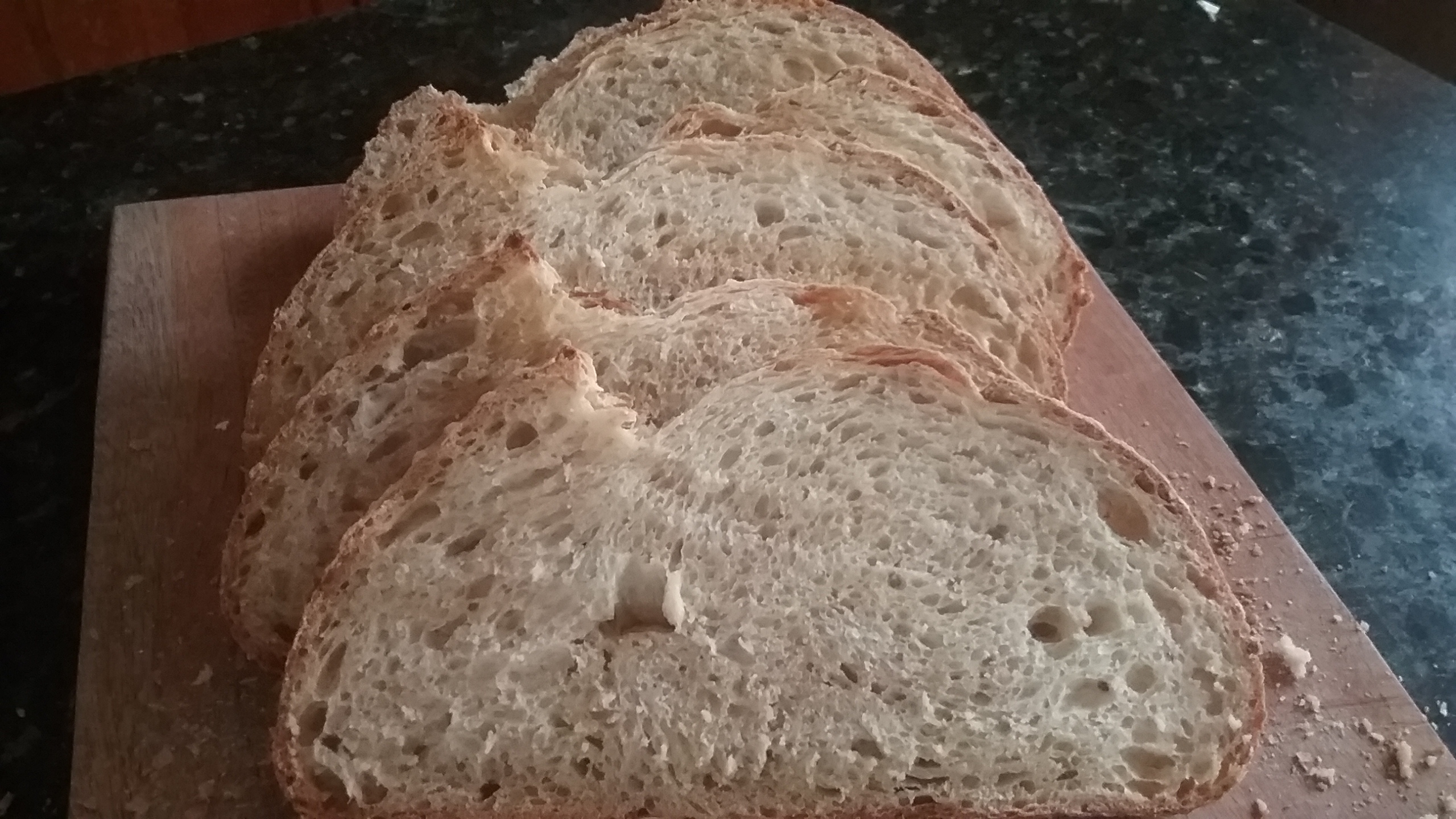
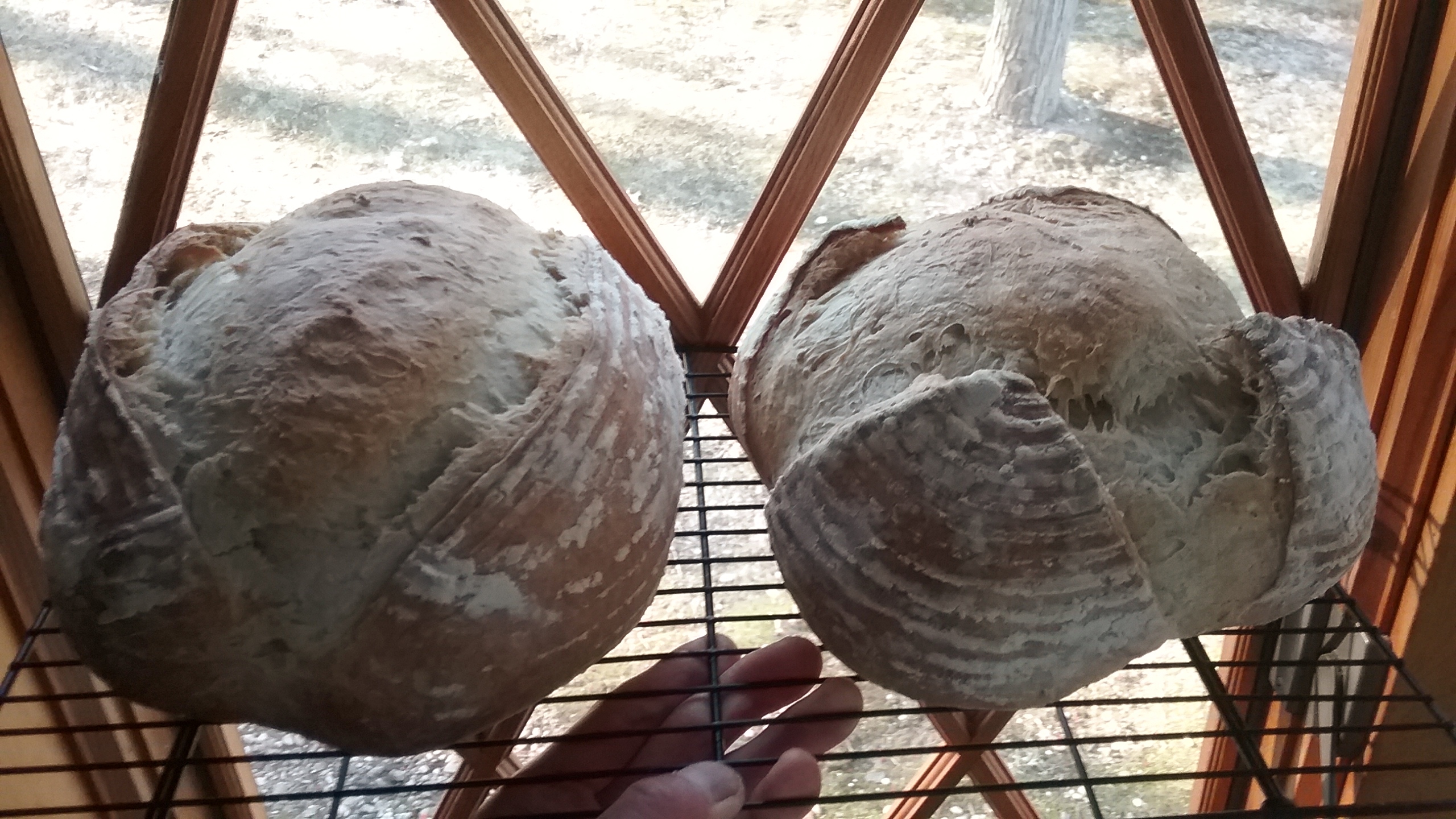
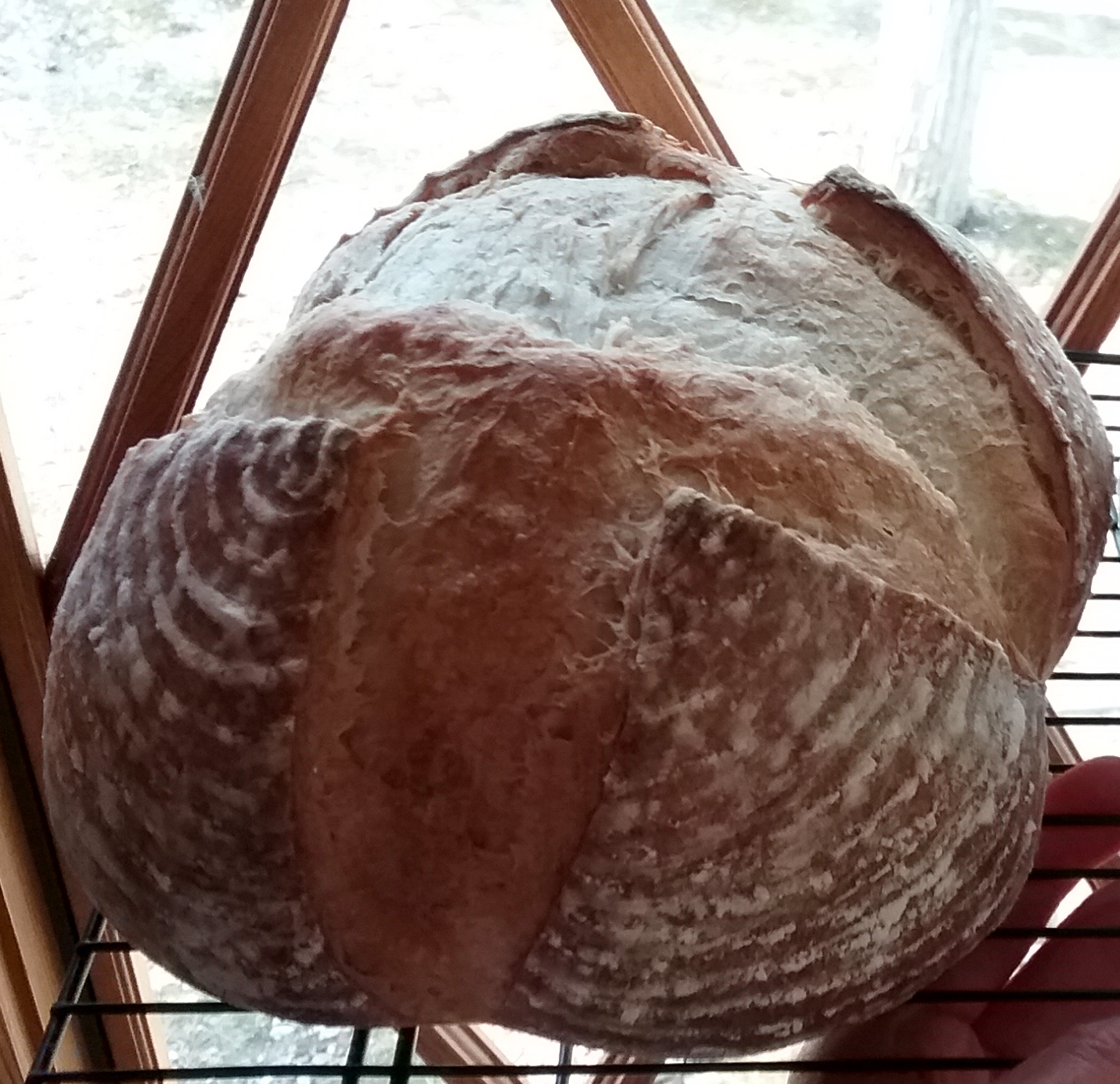
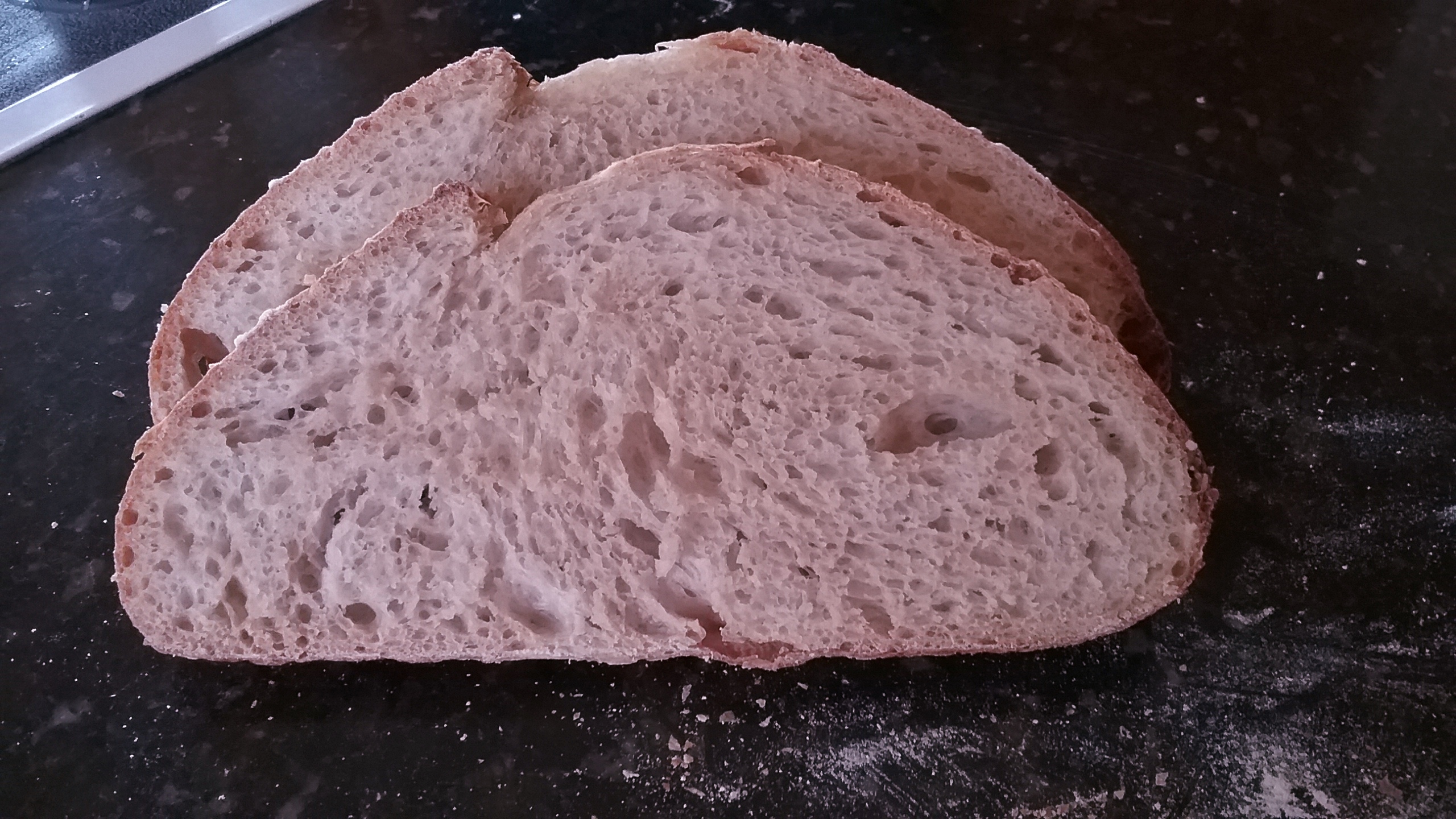
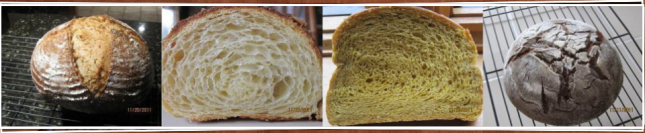
The result: It was not bad at all surprisingly,rather than that, it was really great. I really like the flavor and looks. It came out dense like a rye loaf,  and the taste of the bread was also like a  rye loaf with a bit of keen sourness, but very sweet with full of  complex flavor. The crumb has volume but soft.The color of the crumb was darker than usual and not blistered, which interested me.

Here is the ingredients and method that I haven’t posted here.  This recipe is what I have worked on for a while to complete.

Whole wheat  sandwich loaf: ( This total amount is over weight to mold in my loaf pan, So, I have to decrease the amount of the dough.)

Ingredients:

Levain( Prefermented dough / Old dough):   200g  sourdough starter

Final dough:

6g  Arrowhead high vital gluten flour

115g King Arthur bread flour

300g King Arthur whole wheat flour

250g  water

45g heavy cream

4g honey

6g molasses

14g shortening

Method ( How I made):

  1. Mix all the ingredients.
  2. Autolyze: 30 minutes
  3. Knead by hand until the dough was gassy, elastic and smooth. I didn’t use a stand mixer to make softer crumb at this time.
  4. Bulk fermentation: 5 hours until the dough rose tripled.
  5. Preshape and rest for 30 minutes.
  6. Shape.
  7. Proof: Freezed for 7 days.
  8. Proof: Transferred it to the refrigerator for 24 hours.
  9. Proof: Room temperature at 68F for 6 hours.
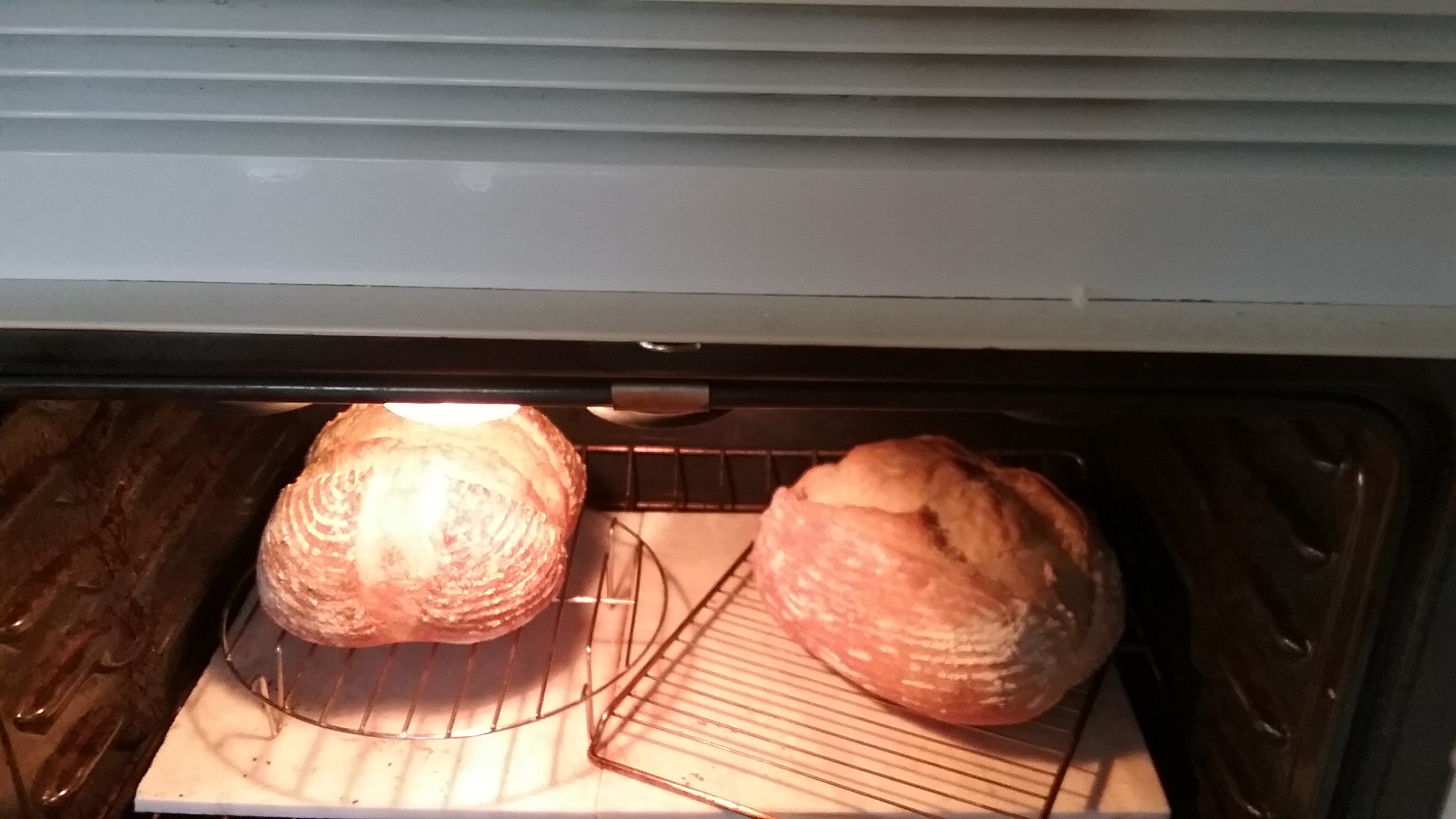
  10. Bake :  475F for 12 minutes with steam/ 425F for 8 minutes/ 400F for 30 minutes/ Shut off the oven and open the door a little bit/ leave it on for 7 minutes.

  * I am not good at slicing bread. Please give me any advice if you have.

Creative Commons License
Koubo by Akiko is licensed under a Creative Commons Attribution 3.0 Unported License.

Attention! ( To use The Cuisinart hand mixer to mix the dough )

Please do not use the Cuisinart hand mixer when you make my sourdough starter.

After using the mixer for a month, It broke.  The motor itself works, but the plastic teeth part of the attachment ( the black part that attach to the whisk) worn out and doesn’t whip as usual.

I checked out the reviews of the Cuisinart hand mixer, There are lot of clams there.

Do I better use the different kind of hand mixer? 

Or, a food processor is better to use safely.. but it is trouble to clean up.

Please let me know if you have some suggestion.

Creative Commons License
Koubo by Akiko is licensed under a Creative Commons Attribution 3.0 Unported License.

How to make a sourdough starter (without sour flavors/ with sour flavors)

I finally succeeded to make sourdough starter for a Japanese sandwich loaf, which has no sour flavors.  I proof  the dough longer or retard it to have pleasant sour flavors when I make hard bread . 

I discard the dough once at the process of making a sourdough starter, but I no longer discard any of them, which means I use my sourdough starter as levain/prefermented dough.

The key is very simple, which I stir the dough during the process with a electric mixer or food processor to get more oxygen inside of the dough to active yeasts like making my way of raisin yeast water. The process of mixing makes the crumb soften, more volume, and enhances flavor as well.

Attention!  Please don’t use the Cuisinart hand mixer to mix the dough. It  broke in a month.

( I used it on this process. but it is a bad idea! )

How to make a sourdough starter ( without sour flavors / with sour flavors)

Prepare:  Sterilized   a jar / a fork  or knife.   

Day 1

  • Organic rye flour ( I used Arrowhead mills Rye Flour.)     44g   100%
  • Filtered water  ( No chlorine water )                               38g   70%

Mix the ingredients well, cover with plastic or a loosen lid, and let stand at 82F / 28℃  for 24 hours, or the dough rises doubled.

* Stirred the dough 2 times during the process.

  • * loosen the lid    

————————————————————————————————————————————————

Stirred at 1st.

Stirred at 2nd time.   

Day2

  • Initial mix       60g   100%
  • Rye flour  ( I used Organic Arrowhead Rye flour.)           30g   50%
  • All purpose flour ( I used King Arthur all purpose flour )  30g  50%
  • Filtered water    ( No chlorine water)                 42g  70%

Mix the ingredients with an electric mixer for 40 seconds , cover with plastic or a lid , and let stand at 82F / 28℃ until the dough rises doubled.

  • 20 hours later – Doubled.
  • Mix all the ingredients with an electric mixer. ( Stir it with a fork or knife until incorporated before using an electric mixer, otherwise the dry ingredients fly all over into the air! )

* Loosen the lid.

——————————————————————————————————————————————————-

3 hours later:  

 The dough rose doubled, so I fed it again.

  • Initial mix    160g   100%
  • All purpose flour (  I used King Arthur allpurpose flour )  160g  100%
  • Filtered water ( No chlorine water )   112g  70%

Mix the ingredients with an electric mixer for 40 seconds , cover with a lid or plastic, and let stand at 82F / 28℃ until the dough rises doubled.

—————————————————————————————————————————————————–

6 hours later:  

 The dough rose doubled, so I fed it again.

  • Initial mix  300g   100%
  • All-purpose flour ( I used King Arthur all- purpose flour)  300g  100%
  • Filtered water  (  No Chlorine water)   210g 70%

Mix the ingredients with an electric mixer for 40 seconds , cover with a lid or plastic, and let stand at 82F / 28℃ until the dough rises doubled.

——————————————————————————————————————————————

5 hours later :  The dough stopped rising rapidly.  It happened the same thing when I made it before, too. It took 2 days until the dough rose tripled.  It is just because I changed to feed white flour ( the different kind of flour ) instead of rye flour.
So, I mixed the dough with the electric mixer to activate the yeast.

You may be able to understand why the dough is getting very sticky and starchy when you check here.

————————————————————————————————————————————————

Day 3        

  12 hours later:    The dough didn’t rise at all.  But I know it will rise again. So I just keep mix the dough sometimes during the day.

   Mixed it with the electric mixer.

3 hours later:    No rise  

  Mixed it with the electirc mixer.

7 hours later :   No rise Mixed it with the electric mixer. Some bubbles appeared…

Day 4

15 hours later :  No rise but bubbles.   The taste of the dough– Sweet.

Mixed it with the electric mixer.

5 hours later:   No rise but bubbles..      So, Mixed it with the electric mixer again.

3 hours later:   The dough started to rise 10 %.

7 hours later:   The dough rose more than double the amount.

  • Initial mix    200g   100%   Discard the rest of them.
  • All-purpose flour ( I used King Arthur all-purpose flour)  200g 100%
  • Filtered water (  No chlorine water )   140g  70%

Mix the ingredients well, cover with plastic or a loosen lid, and let stand at 82F / 28℃   the dough rises 20% more than the original. 

Then, Keep it in the refrigerator until the dough rises doubled.

Left: The previous one that I made at first time.    Right – The new one that I made to post on my blog.

*I prefer using the previous one’s container that I can seal off in the refrigerator. ( I open the lid once a day)

I don’t know which container is better to use clearly, I will keep testing about the difference the two of them.

Note:  I don’t refrigerate the dough more than 3 days.  I use and refresh the dough  every 1-2 days, otherwise, the dough will be weaker unless I refresh the dough 2 or 3 times at room temperature,  or it has sour flavors.

↑ From my experiments, I noticed that the dough was weaker and sourer. But I never tried it with this new starter!
I will test if I can keep this dough in the refrigerator for a week, which will be easier for me to take care of.

When I use the dough to make bread:

1 .  Take out the dough from the refrigerator, put the dough in a food processor to mix, to activate it.  Or, You can knead the dough for 5-10 minutes until the dough is silky.    Use this plastic blade when you mix the dough.  I cut my finger using the metal blade by my mistake. 

2. Put the dough back in the container,cover it with plastic, let it stand at 82F / 28℃ until the dough rises tripled.

  Now, it is ready to use.

How to maintain the sourdough starter:

The sourdough starter: All purpose flour with a bit of rye flour : water = 100% : 100% : 70%

Example :   200g  sourdough starter: 198g all purpose flour 2g rye flour  : 140g

  1. Mix all the ingredients with a stand mixer for a minute or so.
  2. Put the dough in the container and let it stand at 82 F / 28c until the dough rise 20 % more than the original.

Put the container in the refrigerator until you use.  ( I never left the dough more than 3 days.)

*  Using a bit of rye flour is very important to keep the dough healthy and strong in the refrigerator. The sourdough is not sour when I feed rye flour to my sourdough starter.   I had a trouble with my sourdough by feeding only all purpose flour because it was not active.

Q & A:

 Q: When I see my sourdough starter in the refrigerator on the second day,the dough was deflated. Is it okay to use?

A:  Yes.  It will rise well after mixing.

   When I took the dough out from the container.  I was little worried because the dough was wetter than usual.

        After kneading about 7 minutes by hand instead of using a food processor.

                6 hours later:  It rose as usual.

I made cinnamon raisin English muffins with the sourdough.

———————————————————————————————————————————————-

I made a Japanese sandwich loaf using my recipe that I used with raisin yeast water.

I used  a 256g  sourdough starter from the container instead of 149g all purpose flour / 107g raisin yeast water levain.

I also made 5 grain bread using Jefferey Hamelman’s ” BREAD”, which is my one of favorite breads.  I tasted pleasant sours with softer crumb, which my family likes.

I forgot to take pictures of the bread. I can’t post the pictures until my oven is fixed… My oven broke again! :(

By the way, I will make a sourdough loaf  following the recipe from Jeffery Hamelman’s 5 grain bread  exactly using 20% sourdough starter when my oven is fixed.   I will post the result how it goes ( the time of the fermentation/crumb/ texture/flavor etc) compare to the other one with the big portion sourdough starter that I use as levain/. prefermented dough.

Creative Commons License
Koubo by Akiko is licensed under a Creative Commons Attribution 3.0 Unported License.

The process of building Natural Yeast

I learned one thing recently, which there are no good or bad bacterias on the earth. Poisonous or nonpoisonous substances are created  by these bacterias in  the circumstance of the quality of ingredients that we use and atmospheres where we make such as temperature, weather, humidity and so on.

To build strong and stable yeast,

  • You must keep a starter at 82F /28℃ for the first stage.  Fermentation occurs vigorously in the warm environment. At over 86F/30℃, Other bacterias will be also active to disturb growing the yeast.  When Saccharomyces cerevisiae ( yeast )grows in a starter, the yeast keeps out of the other bacterias. Alcohol fermentation keeps out of the other bacterias,too.
  •   For sourdough:  Lactobacillus sanfranciscensis exists as  good yeast.    You can check these out: Ironically I keep making sourdough with flour and water Test1 and 2, even though I want to make the natural yeast  ( Old dough )with flour and water for non sour bread. As soon as your starter has  strong acetic or unpleasant flavors, you won’t be able to fix the flavors.
  • For yeast water:  how I made raisin yeast water .  I recommend to make raisin yeast water for a first try because raisin yeast water is very strong and easy to take care of. It also makes soft and fluff crumb, and has no strong flavors. If you want to try fresh fruit yeast water, you can add 1 tsp raisin yeast water into a jar with fresh fruits and water and ferment it 24 hours at 82F.

Creative Commons License
Koubo by Akiko is licensed under a Creative Commons Attribution 3.0 Unported License.

* Test 2* Natural yeast that started with semolina flour and water for non sour bread

2 weeks ago, I got a Japanese bread baking book for making non sour bread with flour and water.  The Aurthur Hiroko Hayashi insisted that the starter is different from sourdough because it is not sour, and she also mentioned that sourdough must be started with rye flour and water. She called her starter ” Koubo- Pan- shu”-(Natural yeast-Bread-Culture), or 老麺 in Chinese. Other Japanese say ” Flour yeast”  or ” Bread culture”   I will say “ Old dough=Pre-Ferments  ” in English.  However, I think that if the bread has sour tastes ( lactic acid  or acetic acid) it would be sourdough.

I really like her way not to discard her dough except the dough dies. She never discards any of them that is like my raisin yeast water.

* Note: Unfortunately, She passed away in 2010. She was still 40′s. I am very fond of her books. ( I have other kind of her books to make miso, soy sauce, vinegar etc..)

I tried her method once, but the starter came out  little sour like the first one that I tried,but I am still keep her dough in the refrigerator for a chance that I may be able to make non sour bread because they are still young.  It takes a month until ready to bake bread according to Hiroko Hayashi.  I am still skeptical.. Is it really possible to make non sour bread with flour and water? I saw a Japanese home baker who tried her method made non sour bread.  I checked what kind white flour she used.   The flour contains malted rice, which is kind of sake yeast water.  I would understand why she was able to make non sour bread with the flour and water.  But, How about Hiroko Hayashi?

When I built the yeast with white flour and water, the yeast was weaker than I expected. I realized that I should use flour that contain more enzyme to make strong yeast.  Hiroko Hayashi suggested to use semolina flour or whole wheat to start with. So I tried semolina flour to make the yeast using her method with my technique.

Day1

  • 12g semolina flour
  • 6g filtered water

I reformed the dough into a ball 3 times at 4 hours interval to activate the dough.

After mixing the ingredients.

After 3rd reformed the dough. Getting stickier.. No rise.

Day2

  • 15g starter ( The total weight of the Day1 dough)
  • 15g semolina flour
  • 7g filtered water ( Added water until I get the texture of my ear lobe)

I reformed the dough into a ball 3 times at 4hours intervals.

After mixing the ingredients

After 3rd reformed the dough.   No rise.

Day3–  Discarded the surface that was dry in 24 hours.

  • 15g starter ( The total weight of the Day2 dough)
  • 15g semolina flour
  • 7g filtered water ( Added water until I get the texture of my ear lobe)

No more reforming the dough.

The surface was dry.  This is a good sign of the first fermentation.

It rose doubled in volume in 11 hours. so….

I took the dried surface again and  fed the dough like this..

  • 30g starter ( The total weight of the dough)
  • 30g King Arthur all purpose flour
  • 18g filtered water( Added water until I get the texture of my ear lobe)

Mixed them all and put in a zip-lock to store in the refrigerator ( 9℃- the place that I keep butter)….. I don’t close the zip-lock for the dough, which needs to breath.

* Using a zip-lock ( or plastic bag) is Hiroko Hayashi’s way.  I prefer her way when I keep the dough in the refrigerator for a long term. The dough may have excess oxygen when it is in a container, which may be oxidized. I can’t get a right size container for the dough every time.

The place is 3 ℃ warmer than the other places.

Day4/ Day5

  • Reformed the dough once a day.

Day5  Before reforming the dough into a ball.

Day6

Fed the dough…

  • 69g starter ( The total weight of the Day5 dough)
  • 69g King Arthur all purpose flour
  • 36g filtered water ( Added water until I get the texture of my ear lobe)

Before feeding

After feeding.

Day7.8

  • Reformed the dough into a ball once a day.

Day7  Before reforming the dough: It is fermenting!

Day8  Before reforming the dough.It is fermenting more..

Day9 

I fed the dough… ( the plan was 10th day, but it fermented faster than I expected)  In the same time, I had a question about the dough how much the dough rose exactly when I keep the dough in the zip-lock… So I divided the dough in a half to test… One is in a zip-lock, the other one is in a container.

  • 73g starter each ( The total weight of the Day8 dough)
  • 73g King Arthur all purpose flour
  • 36g filtered water ( Added water until I get the texture of my ear lobe)

before feeding

After feeding

Day10   It rose  more than doubled in 24 hours when I checked the dough in the container.   Now I can see how much the dough rose in the zip-lock. The taste of the starter is not sour, which is good news.

In the evening, I made the dough to bake  the Japanese sandwich loaf next day.

  • Levain ( I already got from the dough)– Should be 255g.. but I made a mistake.. I used only 196g

Final dough:

  • 301g  King Arthur bread flour
  • 20g egg yolk
  • 38g  whole milk ( I didn’t have heavy whipping cream)
  • 134g water ( The original was 144g .. I didn’t know why I changed it.)
  • 29g butter
  • 13g sugar
  • 7.2g salt

How I made the dough

  1. Knead the dough with 5 minutes autolyze.
  2. Bulk fermentation 76F   10.5 hours.
  3. Preshape  and 30 minutes bench time.
  4. Shape
  5. Final proof   2 hours.
  6. Bake ( Cold oven)

Bulk fermentation: In 10.5 hours.

Final proof:  before baking. 2 hours later..   I don’t wait any longer not to have sour tastes.

It rose over 180% in the oven.

The crumb is fluff and soft.

The taste:  Very close to non sour bread. When I had some of them when it was still warm, it was very slightly sour. I had it again when it is cooled, the taste was no sour.  I also tasted the semolina and white flour that I used directly.

The taste of the loaf in 24 hours:  It was little sour.  According to Hiroko Hayashi, I will wait another 20 days until I make the sandwich loaf to compare.

Next day:

I made a champagne loaf with the starter using Hiroko Hayashi’s formula, but I added more rye flour to it.

  • 200g starter ( Old dough=Pre-Ferments)
  • 30g  dark rye flour
  • 35g  King Arthur whole wheat flour
  • 335g King Arthur bread flour
  • 287g water
  • 8g salt
  1. Mixed all the ingredients except the salt.
  2. Autolyze for 15 minutes
  3. Added the salt and kneaded until  the dough got gassy. ( 10 -15 minutes)
  4. Bulk fermentation  6.5 hours  — Stretch and fold on the work bench at the first 45 minutes.
  5. Preshape
  6. Bench time 30 minutes.
  7. Proof  1 hour at the room temperature.
  8. Retard for 12 hours  at 6 ℃.
  9. Final proof for 1.5 hours at the room temperature.
  10. Bake 

The day that I baked-The taste : little keen Sour but pleasant  and sweet. It is little too sour for me.The crumb : Soft and fluff . I really like the texture.

The next day-  The taste: little keen sour but very pleasant and less sweet than yesterday, which mean the flavor combined well. The crumb: Softer but chewer than the sourdough with raisin yeast water.

By the way, I really like this natural yeast that started with flour and water as much as I like raisin yeast water, that are used very simple ingredients.   I must say, “Simple is the best.”

Creative Commons License
Koubo by Akiko is licensed under a Creative Commons Attribution 3.0 Unported License.

*Test* Natural yeast that started with white flour and water

Now I am intrigued by simple starter, which is made by white flour and water only.  I also want to make good bread without adding instant yeast at the final dough. But, my main goal is to make non sour sandwich bread with the simplest starter. The taste will be like flour wine when I bite off, which is my dream.

I thought that it will be called ” Sourdough”, but this starter is different when I looked up for sourdough.  I am trying to not have or taste lactic acid or any acetic but Saccharomyces cerevisiae in the dough like yeast water. In Japan, they call the starter ” Flour yeast” ” Bread culture”  or ” 老麺” in Chinese.    I don’t know if I can make it or nor, but I will try until I am a successful.

Day 1

  • 40g  King Arthur all purpose flour
  • 40g  King Arthur bread flour
  • 40g filtered water

* Mix it thoroughly and make into a ball shape, then put in the container  to ferment for 24 hours at the room temperature at 82F.   I reformed 2 times a day to activate the dough.    

Day2

  • 40g King Arthur all  purpose flour
  • 40g King Arthur bread flour
  • 40g filtered water

* Adding the same amount of flour and water into the Day1 dough. Fermented at 82F for 24 hours. I reformed the dough into a ball 2 times a day to activate the dough.  The dough was very sticky. The taste was like sticky yogurt.

Day3

  • Repeat ” Day2″. but ,No more reforming the dough into a ball.

            Very very sticky….

After feeding .

Day4

  • 80g Starter
  • 40g King Arthur all purpose flour
  • 40g King Arthur bread flour
  • 50g filtered water

* In the morning( 24 hours later ) the dough rose more than doubled in volume,I threw some starter on the surface because it was dried.  The taste was mild sour ( lactic acid) and sweet.

I refreshed the starter…

At 3:40pm ( 7 hours later)  It rose doubled in volume.  the picture was taken at 2 pm.

7 hours later  —-
I made 3 different ways to keep the starters


Test  No.1  : Put the dough in a small zip lock  and store it in the refrigerator for a week ,then  A) Feed “Day 4″ ingredients and store it back in the refrigerator for a week.  Repeat A) one more time, and I will bake bread with this sourdough.

Before refrigerating…

7 days later.  the dough has a mild sour taste, and smelled white wine…

80g starter and … ( Very sticky..)

Adding 80g King Arthur all purpose flour and 50g water.. Mix and formed into a ball..

Put int back in the refrigerator and sleep there for 7 days.

Another 7 days later.it rose doubled.

The surface is was like this. It was a refreshing flavor with sweet and very mild lactic acid ( mild sour)

I refreshed the one with 80g starter/80g King Arthur all purpose flour/50g water and keep it in the refrigerator for 6 days, then refresh once before baking.

  ***************************   Another 7 days later ****************************************

It rose more than doubled in the refrigerator.  I made a sandwich loaf without refreshing.  So, I used this cold dough as levain. Because it gets lactic/ acetic acid as soon as I keep this dough at room temperature.

It rose doubled in 9 hours. I usually wait until any dough rise close to tripled but I didn’t wait this time. I knew the yeast is too young for that yet.

After molding…

Before baking  ( Proof  2 hours)  I didn’t want to have sour flavors for this bread, so I didn’t ferment the dough anymore.

I rose 150% over in the oven….

This bread is significantly sweeter and less sour compare to the TEST NO.3.  But I tasted it a very pinch of mild sour. The crumb was soft and fluff, which is a good sign.

Test  No.2 :

Baking bread( 5th day sourdough)

  • 15g starter
  • 15g King Arthur all purpose flour
  • 7g filtered water

*  I refreshed it↑ and it rose doubled in 6 hours.

So, I made levain for Rustic bread  with 5th day sourdough starter.  I thought that the starter is too young to bake bread, so I added 0.3% instant yeast as to 100% flour including preferment flour. I will post the formula soon..

Surprisingly,it only took 3 hours for the bulk fermentation.  Final proof: 30 minutes at 76F, 3 hours at 50F and 30 minutes at 68F.( For my schedule….I had to go out for some errands…)

The taste of crumb was full of sweetness from the flour. It had a mild sour taste. I really like this bread. I wish this bread were made without instant yeast….

Test  No.3   Keep the starter in the refrigerator for a week after refreshing:

I kept 50g starter from the original one, then mixed all of  the ingredients below.

  • 50g starter
  • 50g King Arthur all purpose flour
  • 36g filtered water

                                                 It rose doubled in volume in 6 hours.

So, I refreshed again with the ingredients below.  I immediately put it in the refrigerator.

  • 80g starter
  • 80g King Arthur all purpose flour
  • 50g filtered water

After mixing…

4 days later

6 days later… I am going to prepare for making bread tomorrow..so..

I refreshed.  80g starter/80g King Arthur all purpose flour/ 50g filtered water in the morning.

12 hours later. It rose tripled in bulk.

I made levain for a sandwich loaf at night, and also….

I refreshed it with 80g starter/80g King Arthur all purpose flour/50g water , then refrigerate it to keep the starter.

I will refresh in 6 days and bake bread again…

Here is the sandwich loaf.

It took 8 hours and 20 minutes at the bulk fermentation/2 hours and 45 minutes at the final proof.

It is different from all of the sourdough that started with fruit juice and raisin yeast water.  I tasted pleasant lactic sour and slightly smells white wine like..   I wish I could make non sour bread with this sourdough starter… The taste is more like flour wine,not lactic sour….

****9 days later*****

with malt powder

I kept  the starter in the refrigerator for 6 days and refreshed once before baking… until I fed 1g malt powder, 80g starter, 80g King Arthur all purpose flour, 60g filtered water for refreshing before making levain.  It went all wrong… I thought the starter will be stronger and sweeter… it rose 150% in 8 hours.  but the taste was horrible.   I tasted some weird bitter flavors to it. So, I threw it away.

Creative Commons License
Koubo by Akiko is licensed under a Creative Commons Attribution 3.0 Unported License.

How to score on a round and oval loaf

Scoring on an oval loaf is much easier than a round loaf to have open spring  from my experiences.  I still feel difficult to score on an round loaf, but I am able to fix it now.

More important, you have to have good steam in your oven. Here is the steaming method that I use for a round and oval loaf.

How to score on a round loaf  / boule ( boule = ball in french / a round loaf by wikipedia)

Place an round loaf on the wood board with parchment paper.

Holding your razor at 90℃…

It doesn’t look good.. So I always score 2 times at least…

Score again,  following  the red arrows…( I got this idea from a Japanese book ” Coupe Junkies“.)

*If the corners are not still separated after the second scoring,

score from backward at 45℃.

Oven spring!

**************************************************************************************************

How to score on an oval loaf or Bâtard ( Bâtard = a type of bread similar to baguette by wikipedia)


The key is ….

  •  Scoring straight
  • Same depth
  • scoring from edge to edge
  • At 45℃

I should have scored further until the edge.

Creative Commons License
Koubo by Akiko is licensed under a Creative Commons Attribution 3.0 Unported License.

Follow

Get every new post delivered to your Inbox.